

Hernia-friendly clothing guide: comfort and support 2026
Living with an inguinal hernia or ostomy means rethinking your wardrobe. Many people discover too late that their favorite jeans or belt worsens discomfort, causes shifting of support garments, or even triggers complications. The wrong clothing can restrict blood flow, irritate surgical sites, or fail to accommodate necessary support devices. This guide walks you through selecting hernia-friendly clothing that balances proper support, breathability, and discreet comfort so you can move through your day with confidence and reduced symptoms.
Table of Contents
- Understanding Your Hernia And Clothing Needs
- Choosing The Right Materials And Fit For Comfort And Safety
- How To Incorporate Supportive Garments And Accessories
- Common Mistakes And Tips For Effective Hernia-Friendly Clothing Use
- Discover Hernia-Friendly Support Briefs And Belts
- FAQ
Key takeaways
| Point | Details |
|---|---|
| Prioritize breathable fabrics | Soft, moisture-wicking materials like cotton blends reduce skin irritation and promote healing. |
| Ensure proper garment fit | Support briefs and belts must match your body shape and hernia location to prevent complications. |
| Avoid restrictive clothing | Tight waistbands and rigid belts can worsen symptoms and restrict circulation during recovery. |
| Choose supportive footwear | Flat, stable shoes minimize abdominal strain and pressure on healing tissues. |
| Use specialized support garments | Hernia-specific briefs and belts provide discreet, effective compression tailored to your needs. |
Understanding your hernia and clothing needs
Your hernia type, location, and body shape directly influence which clothing and support garments work best. Hernia belts are not one-size-fits-all because everyone’s waist-to-hip ratio, abdominal contour, and hernia site differ. An inguinal hernia in the groin requires different support than a parastomal hernia near a stoma opening. Understanding these distinctions prevents you from choosing garments that slip, bunch, or apply pressure in the wrong places.
Different hernia types demand specific support approaches. Inguinal hernias benefit from gentle compression at the groin, while umbilical hernias need centered abdominal support. Parastomal hernias require garments designed to accommodate ostomy appliances without compromising stoma function. If you have an irreducible or strangulated hernia, avoid belts entirely and seek immediate surgical care. These acute conditions need professional intervention, not compression garments.
Your individual anatomy matters just as much as hernia type. A belt that works perfectly for someone with a straight torso may shift constantly on someone with a curved lower back. Pay attention to where your hernia bulge appears and how your body moves throughout the day. This awareness helps you select hernia support briefs for discreet use that stay in position during sitting, standing, and walking.
Key anatomical factors to consider when choosing hernia clothing:
- Waist-to-hip ratio affects belt positioning and stability
- Abdominal shape influences how compression distributes across tissue
- Hernia location determines where support should concentrate
- Body mobility patterns reveal whether garments will shift during activity
- Skin sensitivity guides fabric and closure choices
Choosing the right materials and fit for comfort and safety
Fabric selection makes the difference between healing comfort and ongoing irritation. Loose-fitting clothing made from soft, breathable materials supports recovery by allowing air circulation and reducing friction against sensitive skin. Cotton blends, bamboo fabrics, and moisture-wicking synthetics pull sweat away from your body, preventing rashes and bacterial growth around surgical sites or hernia areas.
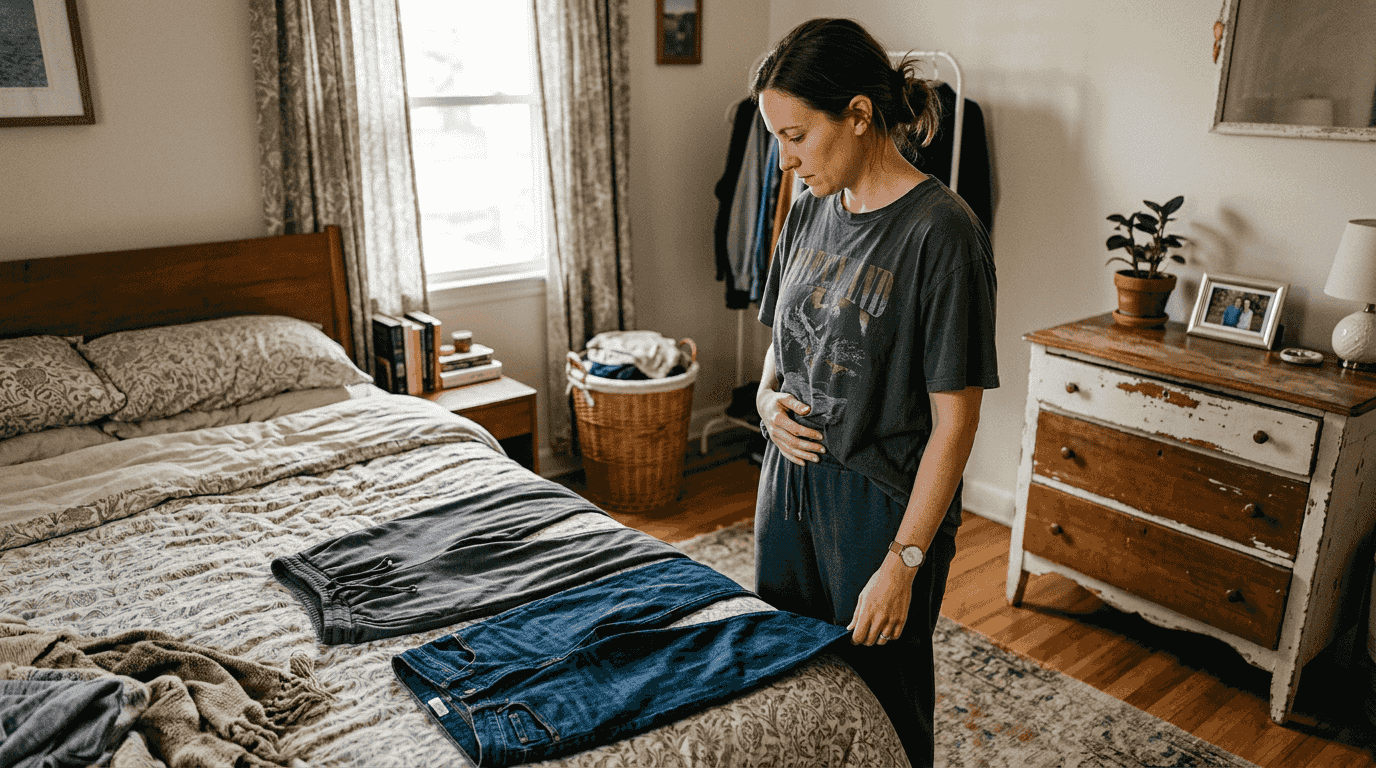
Avoid tight, rigid waistbands during early recovery and whenever symptoms flare. Stiff denim, leather belts, and constricting elastic bands concentrate pressure on vulnerable tissue. Instead, choose elastic waist pants with gentle give or drawstring closures you can adjust throughout the day. Your clothing should move with you, not against you. Garments that cut into your abdomen when you sit or bend signal poor fit and potential complications.
Support garments require careful attention to compression levels. You want gentle, even pressure that holds tissue in place without restricting blood flow or breathing. Belts with less than 35% open-weave area trap heat and moisture, increasing skin irritation risk. Look for mesh panels, perforated designs, or breathable synthetic blends that maintain support while allowing ventilation. The right balance keeps you comfortable during extended wear.
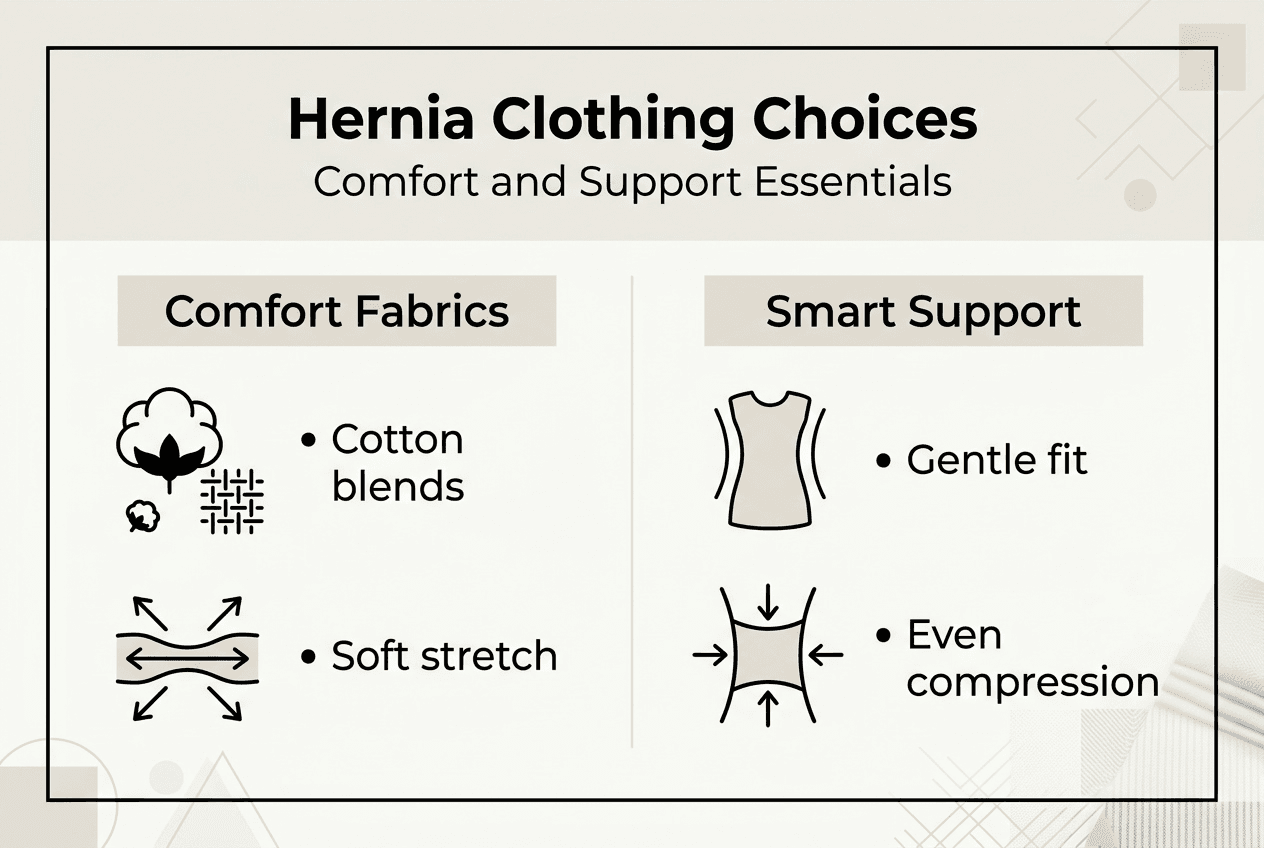
Proper fit prevents most support garment complications. Measure your waist and hips at the exact points where the garment will sit, not your general clothing size. A belt that’s too loose shifts position and loses effectiveness. One that’s too tight restricts circulation and causes pain. Most quality comfort briefs for hernia recovery include sizing guides with specific measurement instructions. Follow them precisely.
Material and fit priorities for hernia-friendly clothing:
- Soft, breathable natural or technical fabrics
- Elastic or adjustable waistbands without rigid pressure points
- Open-weave or mesh designs in support garments
- Proper sizing based on actual measurements, not standard clothing sizes
- Seams positioned away from hernia sites and incisions
Pro Tip: Wash new support garments before first use to soften fabrics and remove manufacturing residues that might irritate sensitive skin.
How to incorporate supportive garments and accessories
Supportive hernia garments serve as tools, not permanent solutions, and work best when used according to medical guidance. Gentle compression from supportive garments can reduce discomfort, prevent hernia enlargement, and support healing after surgery. However, timing and application method matter enormously. Never use belts during the first week after surgery unless your surgeon specifically recommends it. Early compression can interfere with wound healing and increase complication risk.
Selecting the right supportive garment starts with understanding your specific needs. Inguinal hernias typically benefit from briefs with built-in support panels that hold tissue gently in place. Parastomal hernias require specialized designs that accommodate ostomy pouches while preventing bulging around the stoma. Abdominal binders provide broader support for umbilical or incisional hernias. Match the garment type to your hernia location and activity level.
Footwear choices affect abdominal pressure more than most people realize. Flat, supportive shoes reduce pressure on your abdominal wall by maintaining proper posture and gait. High heels force your pelvis forward, tightening abdominal muscles and increasing intra-abdominal pressure. During recovery and whenever symptoms worsen, stick with athletic shoes, supportive flats, or low-heeled footwear with good arch support.
Steps for incorporating support garments effectively:
- Consult your healthcare provider about appropriate garment types and wear duration for your specific hernia
- Measure carefully and select properly sized garments using manufacturer guidelines
- Start with short wear periods and gradually increase as comfort allows
- Position support panels or pads directly over the hernia site for maximum effectiveness
- Monitor skin for redness, irritation, or pressure marks and adjust fit as needed
- Combine garments with appropriate clothing choices like loose pants and supportive shoes
Abdominal binders deserve special mention for post-surgical recovery and parastomal hernia prevention. These wide elastic bands wrap around your midsection, providing circumferential support. Use them during activities that increase abdominal pressure, like walking, light housework, or prolonged standing. Remove binders during rest periods to allow skin recovery and normal breathing patterns.
Pro Tip: Keep two support garments so you can rotate them daily, allowing proper washing and drying time without interrupting your support routine.
Consider sports briefs for hernia support if you maintain an active lifestyle. These garments combine moisture-wicking fabrics with strategic compression zones, letting you exercise safely while managing your hernia.
Common mistakes and tips for effective hernia-friendly clothing use
Most hernia garment complications stem from fit issues rather than design flaws. Improper fit of hernia belts accounts for over 68% of reported problems. Belts that slide during movement lose effectiveness and can bunch fabric uncomfortably. Overly tight belts restrict breathing, limit mobility, and risk cutting off circulation. Finding the sweet spot requires patience and willingness to adjust.
Rigid single-band closures create concentrated pressure points that interfere with natural breathing patterns. Your abdomen expands and contracts with each breath. Support garments need enough flexibility to accommodate this movement without loosening overall support. Multi-strap designs or elastic panels distribute pressure more evenly and adapt to your body’s natural rhythms throughout the day.
Excessive compression causes more problems than it solves. Some people mistakenly believe tighter equals better support. In reality, over-compression restricts blood flow, increases skin breakdown risk, and can actually worsen hernias by forcing tissue into unnatural positions. Avoid tight clothing restricting blood flow around your groin and abdomen. You should be able to slide two fingers comfortably under any support garment.
| Mistake | Consequence | Better Approach |
|---|---|---|
| Wearing belts first week post-surgery | Interferes with wound healing, increases infection risk | Wait until surgical clearance, use loose clothing only |
| Choosing based on price alone | Poor fit, non-breathable materials, rapid deterioration | Invest in quality garments with proper sizing and ventilation |
| Ignoring skin irritation signs | Rashes, pressure sores, bacterial infections | Remove garment immediately, assess fit, try different material |
| Using one-size-fits-all products | Shifting, ineffective support, discomfort | Get measured properly, select size-specific garments |
| Wearing support 24/7 without breaks | Skin breakdown, muscle weakening, circulation issues | Remove during sleep and rest periods unless medically advised |
Timing matters as much as garment selection. Avoid all belts and stiff waistbands during your first recovery week. Your body needs time to begin healing without external pressure. Once cleared by your surgeon, introduce support gradually. Start with two to four hours daily and increase based on comfort and symptom response. Some people need support only during physical activity, while others benefit from all-day wear.
Regularly assess how your clothing and support garments feel throughout the day. Comfort levels change as swelling decreases, healing progresses, or activity patterns shift. What worked perfectly last month might need adjustment now. Pay attention to new pressure points, shifting, or increased discomfort. These signals indicate you need to resize, reposition, or replace your garments.
Common warning signs requiring garment adjustment:
- Redness or indentation marks lasting more than 30 minutes after removal
- Numbness or tingling in legs or groin area
- Increased hernia bulging despite wearing support
- Garment rolling, bunching, or shifting position frequently
- Difficulty breathing deeply or comfortably
- New pain or discomfort in previously unaffected areas
Pro Tip: Take photos of proper garment positioning when it feels right, so you can replicate the exact placement and tension level each time you dress.
Quality post-surgery hernia slip briefs eliminate many common fit problems by integrating support directly into everyday underwear, reducing the number of separate garments you need to manage.
Discover hernia-friendly support briefs and belts
Finding clothing that truly supports your hernia while maintaining comfort and discretion transforms daily life. After understanding fit principles, material requirements, and common pitfalls, you’re ready to explore specialized solutions designed specifically for hernia management. Quality support garments combine medical functionality with everyday wearability, letting you stay active without constant awareness of your condition.
PeskyHernia offers handcrafted support garments made in Italy using premium, breathable materials. Our inguinal hernia sport support briefs provide targeted compression for active lifestyles, while women’s hernia support briefs offer feminine-specific designs that accommodate anatomical differences. For broader support needs, our abdominal support belts feature adjustable compression and breathable construction. Each product focuses on helping you manage your hernia comfortably and confidently throughout your daily activities.
FAQ
What type of clothing is best during hernia recovery?
Loose, soft, breathable clothing like elastic waist sweatpants and oversized t-shirts work best during recovery. These garments don’t restrict movement or put pressure on healing tissues. Avoid anything with stiff waistbands, tight elastic, or rigid closures for at least the first two weeks. Button-front shirts eliminate the need to pull clothing over your head, reducing abdominal strain during dressing.
Can hernia belts be worn all day?
Hernia belts require careful fitting and should only be used according to medical guidance. Improper fit can cause complications, so consult your doctor about safe wear duration for your specific situation. Never use belts for irreducible or strangulated hernias, which need immediate surgical attention. Most people benefit from removing belts during sleep and rest periods to allow skin recovery and normal circulation.
Are there special clothing options for people with ostomies?
Specialized ostomy briefs and supports provide discreet protection while accommodating stoma appliances. These garments feature panels or openings designed specifically for ostomy pouches, preventing pressure on the stoma while supporting surrounding tissue. Breathable, soft fabrics reduce irritation around the appliance. Quality ostomy underwear for women combines functionality with comfort, helping you maintain confidence and ease throughout your day.
What footwear is recommended during hernia recovery?
Flat, supportive shoes help avoid additional pressure on the abdominal wall during recovery. Athletic shoes with good arch support, comfortable flats, or low-heeled footwear maintain proper posture without forcing your pelvis forward. High heels increase intra-abdominal pressure and should be avoided until you’re fully healed. Slip-on styles eliminate the need to bend over for lacing, reducing strain during the dressing process.
How do I know if my support garment fits properly?
A properly fitted support garment stays in position during normal movement without shifting or rolling. You should feel gentle, even pressure without pain, numbness, or breathing restriction. Check that you can slide two fingers comfortably between the garment and your skin. No redness or indentation marks should remain more than 30 minutes after removal. If you experience any discomfort, skin irritation, or garment movement, reassess your size and positioning.
When should I replace my hernia support garments?
Replace support garments when elastic loses tension, fabrics thin or tear, or closures no longer hold securely. Most quality garments last six to twelve months with regular use and proper care. Signs you need replacement include visible wear, persistent odors despite washing, or decreased support effectiveness. Your body changes over time too. Weight fluctuations of more than ten pounds typically require resizing to maintain proper fit and support.
Recommended
- INGUINAL HERNIA SUPPORT COMFORT BRIEF - PANT OPEN TYPE Orione Ref.515 – Pesky Hernia - Orthopaedic Products
- INGUINAL HERNIA SUPPORT BRIEF - PANT Female - Woman Orione Ref.536 – Pesky Hernia - Orthopaedic Products
- INGUINAL HERNIA SUPPORT SPORT BRIEF - PANT Medium Height Orione Ref.31 – Pesky Hernia - Orthopaedic Products
- INGUINAL HERNIA SUPPORT DISCRETE BRIEF - PANT Orione Ref.560 – Pesky Hernia - Orthopaedic Products